
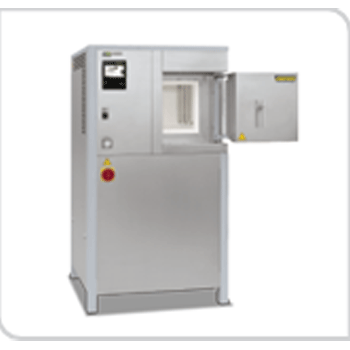
Description High Temparature Furnace A high-temperature furnace is a specialized piece of equipment designed to achieve and maintain extremely high temperatures, typically exceeding 1000°C (1832°F), and often reaching up to 1800°C or even higher (e.g., 2400°F / 1315°C for some vacuum furnaces, or ultra-high temperature graphitization furnaces). These furnaces are critical for various industrial and research applications that require intense heat for material processing and testing.
1. Temperature Range:
Generally operate between 1400°C to 1800°C.
Some specialized models, like ultra-high temperature graphitization furnaces, can reach even higher.
2. Heating Mechanisms:
Electrical Resistance Heating: This is a common method, where heating elements (e.g., silicon carbide (SiC) or molybdenum disilicide (MoSi2)) generate heat as electricity passes through them.
Induction Heating: Uses rapidly alternating electromagnetic fields to induce eddy currents in the material, directly heating it.
Combustion (Gas-fired or Oil-fired): In industrial settings, fuel combustion can generate high temperatures.
3. Construction and Insulation:
Heating Elements: Typically located on both sides of the heating chamber to ensure good thermal uniformity.
Insulation: High-temperature furnaces rely heavily on advanced thermal insulation materials, such as vacuum-formed ultra-high purity alumina low thermal mass insulation with pre-sintered fiber insulation board.
Chamber Materials: Internal chambers are constructed from materials that can withstand extreme temperatures, such as refractory ceramics.
Atmosphere Control: Many high-temperature furnaces allow for controlled atmospheres (inert, reducing, oxidizing, or vacuum) to prevent oxidation or achieve specific material properties.
4. Operating Principles:
Precise Temperature Control: High-temperature furnaces employ microprocessor-based PID controllers and advanced control systems to accurately regulate heating, soaking (holding at a specific temperature for a set duration), and cooling cycles.
Heat Transfer: Radiation is the dominant heat transfer mechanism in high-temperature furnaces, especially at very high temperatures.
Safety Features: Equipped with safety mechanisms like over-temperature limiters with adjustable cutout temperatures and thermocouple break protection to protect the furnace and its load from damage due to runaway temperatures.
Efficiency: Designed to minimize heat loss and optimize energy consumption.
5. Types of High-Temperature Furnaces:
Box Furnaces (Muffle Furnaces/Chamber Furnaces):
Tube Furnaces: Cylindrical furnaces, often used for processes requiring a controlled atmosphere or for processing samples in a tube.
Vacuum Furnaces: Operate in a vacuum or low-pressure environment, ideal for processes where a clean, contamination-free environment is critical and for minimizing oxidation.
Continuous Furnaces: Designed for high-volume production, handling a continuous flow of workpieces (e.g., pusher furnaces, belt furnaces).
Specialized Furnaces: Such as rotary hearth furnaces, bell furnaces, salt bath furnaces, etc., each designed for specific applications.
6. Applications: High-temperature furnaces are indispensable in a wide range of industries and research fields, including:
 Atomic Absorption Spectrophotometer
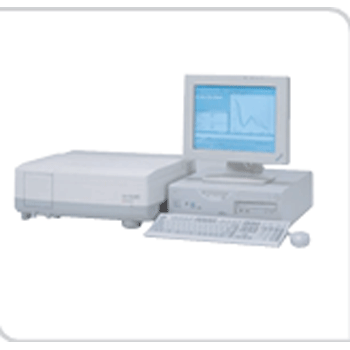 UV Vis Spectrophotometer
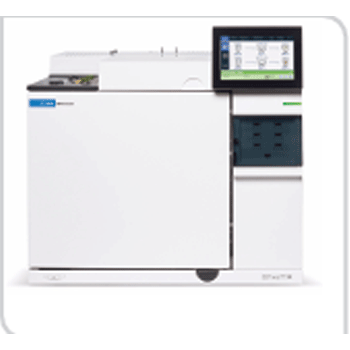 Gas Chramatograp (GC)
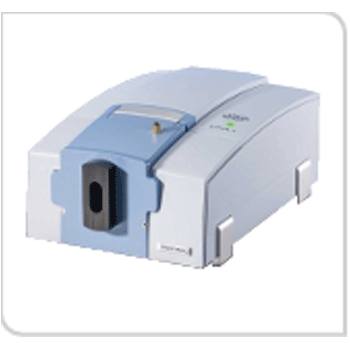 FT-IR Spectrometer
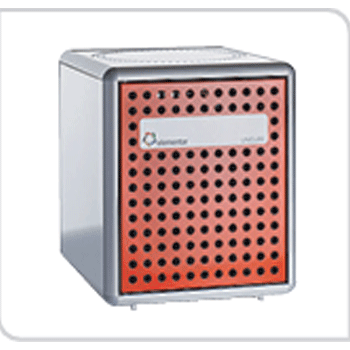 CHNS Analyzer
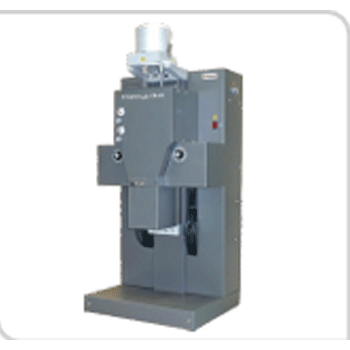 Simultaneous Thermal Analysis (TGA DTA)