
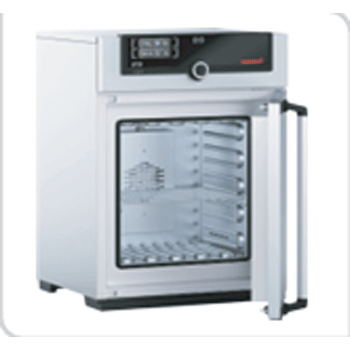
An incubator is a device used to provide a controlled, stable, and optimal environment for various purposes, most commonly for
1. Biology and Medicine (Laboratory Incubators):
Cell and Tissue Culture: These are perhaps the most common type of laboratory incubator. They maintain specific conditions like temperature, humidity, and CO2 levels that mimic the physiological environment required for the growth and proliferation of mammalian, insect, or plant cells.
Microbial Culture: Used to grow bacteria, fungi, and other microorganisms by providing ideal temperature and sometimes anaerobic or aerobic conditions.
Incubation of Samples: For various biological assays, enzyme reactions, and diagnostic tests that require precise temperature control.
Sterilization and Drying (in some cases): While not their primary function, some incubators with higher temperature ranges can be used for drying samples or even for certain sterilization processes.
Key Features of Laboratory Incubators:
Temperature Control: Highly precise and stable temperature maintenance (e.g., 37°C for mammalian cells, or a range for microbial growth).
CO2 Control (for CO2 Incubators): Regulates the carbon dioxide concentration (typically 5%) essential for buffering the pH of cell culture media.
Humidity Control: Prevents evaporation of culture media and maintains optimal conditions.
Air Circulation: Ensures uniform temperature and gas distribution within the chamber.
Sterilization Cycles: Many modern incubators have built-in sterilization cycles (e.g., high heat or UV light) to prevent contamination.
Shelving: Adjustable shelves to accommodate various culture vessels.
Monitoring and Alarms: Digital displays for temperature, CO2, and humidity, with alarms for deviations.
2. Poultry Farming (Egg Incubators):
Artificial Incubation of Eggs: These incubators provide the necessary warmth, humidity, and often automatic turning mechanisms to hatch eggs from chickens, ducks, quails, and other poultry.
Increased Hatch Rate: By controlling environmental factors precisely, they can significantly improve the hatch rate compared to natural incubation, especially for large-scale operations.
Key Features of Egg Incubators:
Temperature Control: Crucial for embryonic development (specific temperatures vary by species).
Humidity Control: Essential for preventing the egg from drying out and for proper membrane development.
Egg Turning Mechanism: Many incubators automatically turn the eggs at regular intervals to prevent the embryo from sticking to the shell and to ensure even heat distribution.
Ventilation: Provides fresh air and removes waste gases.
3. Neonatal Care (Infant Incubators):
Support for Premature or Sick Infants: These are specialized medical devices used in hospitals to provide a safe, controlled, and stable environment for newborns, especially those born prematurely or with medical complications.
Temperature Regulation: Premature infants have difficulty regulating their body temperature, so the incubator provides a warm, consistent environment.
Humidity Control: Helps prevent fluid loss and maintains skin integrity.
Oxygen Administration: Often equipped to deliver supplemental oxygen when needed.
 Atomic Absorption Spectrophotometer
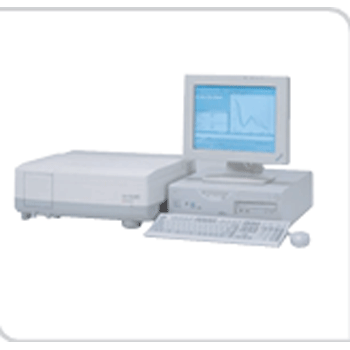 UV Vis Spectrophotometer
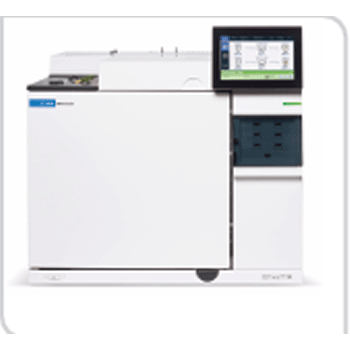 Gas Chramatograp (GC)
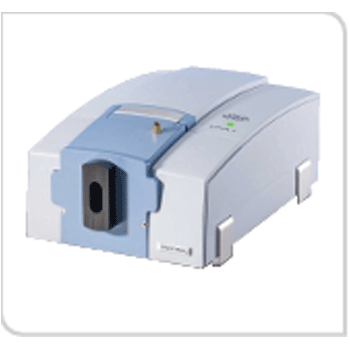 FT-IR Spectrometer
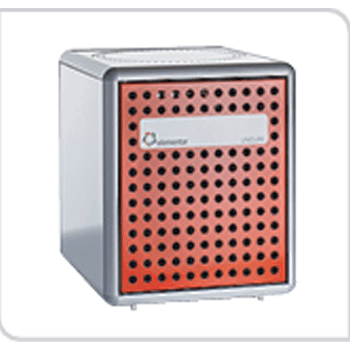 CHNS Analyzer
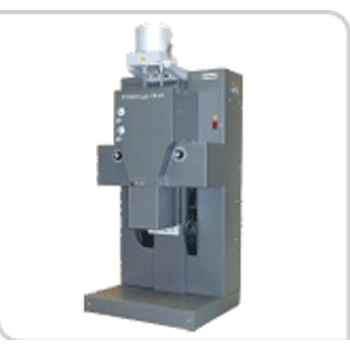 Simultaneous Thermal Analysis (TGA DTA)