Circular Shaking Motion: This is the defining feature, creating a gentle yet thorough mixing action. The orbit size (the diameter of the circular path) can vary, with larger orbits often suitable for lower speeds and higher aeration, while smaller orbits are better for higher speeds.
Low Vibration: Orbital shakers are generally designed to produce minimal vibration, which is crucial for applications involving delicate samples like living cells.
Variable Speed: Most orbital shakers offer adjustable shaking speeds (RPMs), allowing for customization based on the application's requirements, from gentle mixing to more vigorous agitation.
Controlled Environment Options: Many orbital shakers can be used in ambient settings, while others are designed to operate within incubators (incubator shakers) or even with refrigeration capabilities, allowing for precise temperature control during mixing. Some are also CO2-resistant for mammalian cell culture applications.
Versatile Platform: The platform typically has clamps or other securing mechanisms to hold various sizes and types of vessels firmly in place during operation. Universal platforms and specific flask clamps are common accessories.
Digital Control: Modern orbital shakers often feature digital controls for precise setting of speed, time, and sometimes temperature, enhancing reproducibility and ease of use.
Quiet Operation: Due to their smooth orbital motion, they tend to operate quietly.
Common Applications in Laboratories: Orbital shakers are indispensable in many scientific disciplines, particularly in:
Cell Culture: Providing continuous and uniform agitation to ensure even distribution of nutrients and gases, promoting optimal growth of cells, bacteria, and yeast.
Bacterial Growth and Suspension: Ideal for cultivating microbial cultures and keeping them suspended in liquid media.
Solubility Studies: Aiding in the dissolution of solid substances into liquids, ensuring homogeneous solutions.
General Mixing and Blending: For routine laboratory tasks requiring consistent agitation of reagents or samples.
Staining and Washing Procedures: Used in various biological assays, such as Western blotting, for efficient washing and staining steps. Extraction Procedures: Improving the efficiency of extracting compounds from samples. Chemical Reaction Research: Used to ensure homogeneity and optimize reaction kinetics in chemical synthesis.nSample Preparation: Homogenizing samples before further analysis. Components: Base: Provides stability for the instrument. Platform: The surface where sample vessels are placed and secured. Clamps/Holders: Devices to secure flasks, bottles, or tubes to the platform. Motor: Provides the power for the orbital motion. Controller: Allows users to adjust settings like speed and time. In summary, an orbital shaker is a fundamental piece of laboratory equipment that provides a controlled, gentle, and efficient circular shaking motion for a wide range of mixing, agitation, and culture applications.

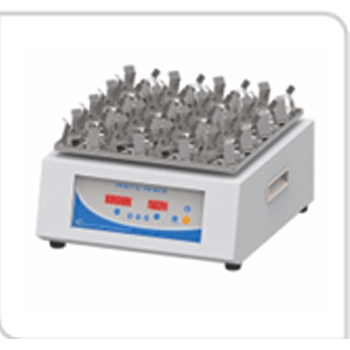
 Atomic Absorption Spectrophotometer
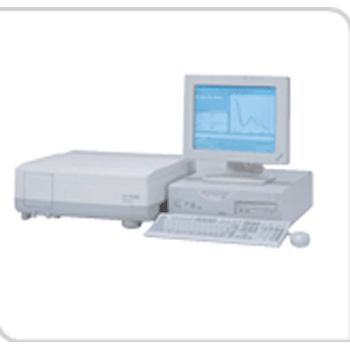 UV Vis Spectrophotometer
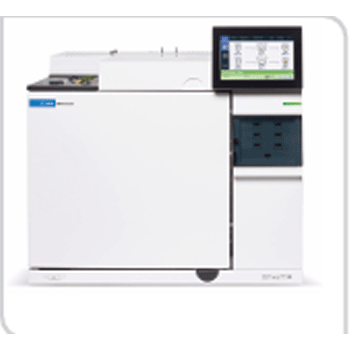 Gas Chramatograp (GC)
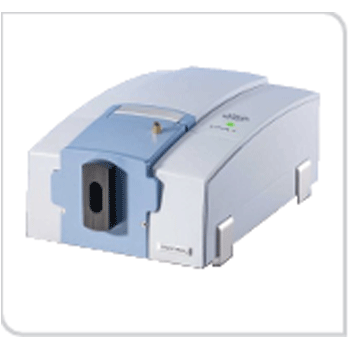 FT-IR Spectrometer
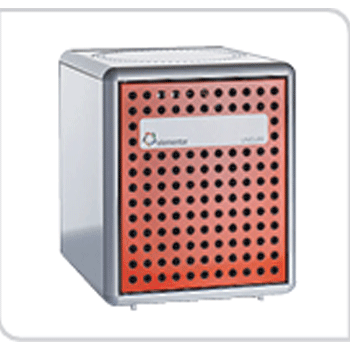 CHNS Analyzer
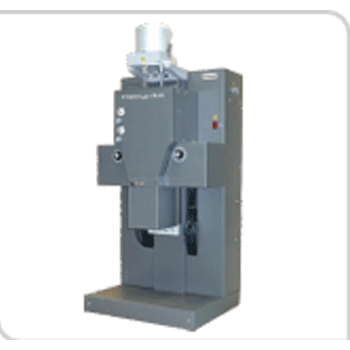 Simultaneous Thermal Analysis (TGA DTA)