
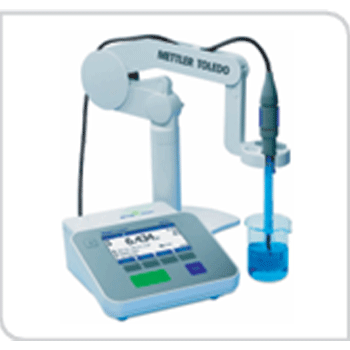
pH stands for "potential of Hydrogen." It quantifies the hydrogen-ion activity (or concentration, in dilute solutions) in a solution. Acidic solutions have a pH less than 7, indicating a higher concentration of hydrogen ions (H+). Neutral solutions have a pH of exactly 7, meaning equal concentrations of hydrogen and hydroxide ions (OH-). Basic (alkaline) solutions have a pH greater than 7, indicating a higher concentration of hydroxide ions (OH-).
pH Measuring Electrode (Glass Electrode): This is a specialized glass bulb that is sensitive to hydrogen ions.
Reference Electrode: This electrode maintains a stable, known voltage regardless of the sample's pH. It provides a constant comparison point for the voltage generated by the pH measuring electrode.
High-Impedance Meter (the "meter" itself): The small voltage signals generated by the electrodes are very weak.
The process generally involves:
Ion Exchange: When the electrodes are immersed, hydrogen ions from the sample solution exchange with metal ions within the special glass membrane of the measuring electrode.
Voltage Generation: This charge difference results in a tiny voltage (potential difference) between the measuring electrode and the reference electrode.
Conversion to pH: The pH meter measures this voltage difference and, using an internal algorithm (often based on the Nernst Equation), converts it into a pH reading, which is then displayed.
Key Features and Considerations:
Calibration: pH meters must be regularly calibrated using standard buffer solutions of known pH (e.g., pH 4, 7, and 10) to ensure accurate readings.
Temperature Compensation (ATC): pH measurements are temperature-sensitive.
Electrode Care: pH electrodes are delicate and require proper storage and maintenance to prolong their lifespan and ensure accurate measurements.
 Atomic Absorption Spectrophotometer
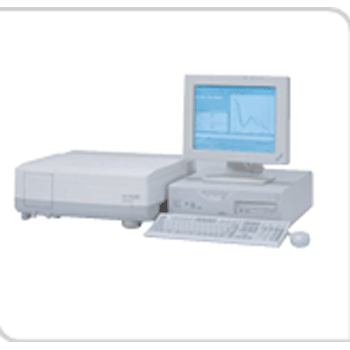 UV Vis Spectrophotometer
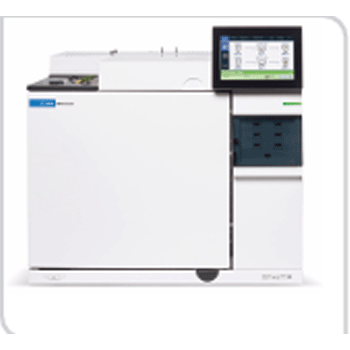 Gas Chramatograp (GC)
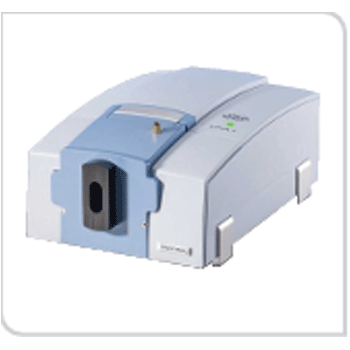 FT-IR Spectrometer
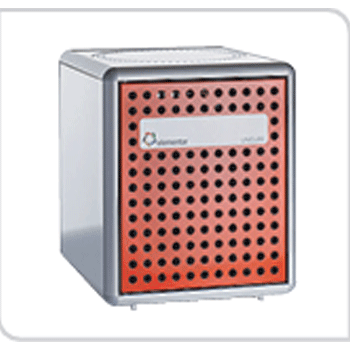 CHNS Analyzer
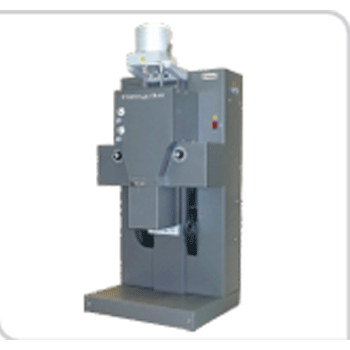 Simultaneous Thermal Analysis (TGA DTA)