
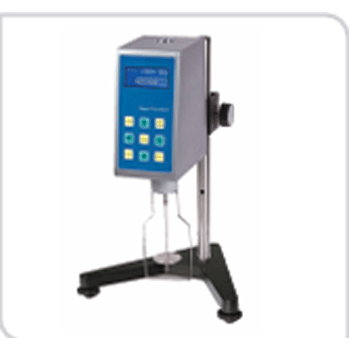
The core principle behind a rotary viscometer is to measure the torque required to rotate a spindle at a constant, controlled speed within a fluid.
A Rotary Viscometer (also known as a Rotational Viscometer) is an instrument used to measure the viscosity of fluids by analyzing the resistance encountered by a rotating element (spindle) submerged in the fluid.
Principle of Operation:
The core principle behind a rotary viscometer is to measure the torque required to rotate a spindle at a constant, controlled speed within a fluid.
Rotation: A motor drives a spindle (which can have various shapes like cylinders, cones, or disks) at a precise, pre-set angular velocity (speed).
Resistance (Torque): As the spindle rotates through the fluid, the fluid exerts a viscous drag or resistance on the spindle.
Measurement: A torque sensor within the viscometer measures this resistance.
Calculation: The measured torque is directly proportional to the fluid's viscosity.
Spindle/Rotor: The rotating element immersed in the sample.
Drive System/Motor: Controls and maintains the constant rotational speed of the spindle.
 Atomic Absorption Spectrophotometer
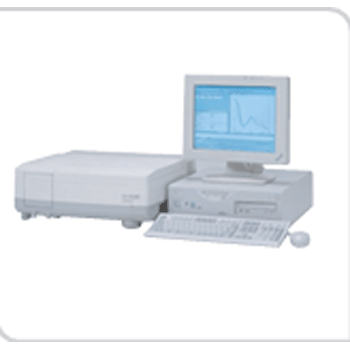 UV Vis Spectrophotometer
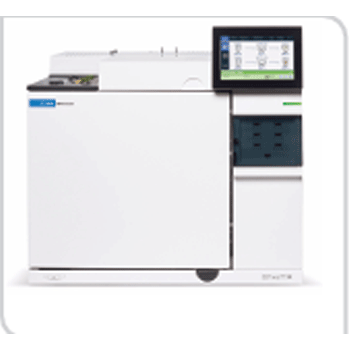 Gas Chramatograp (GC)
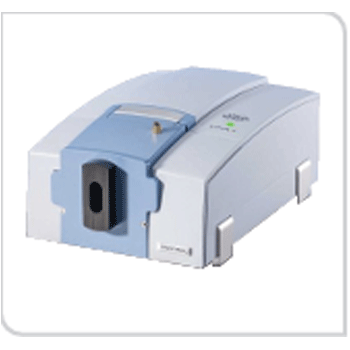 FT-IR Spectrometer
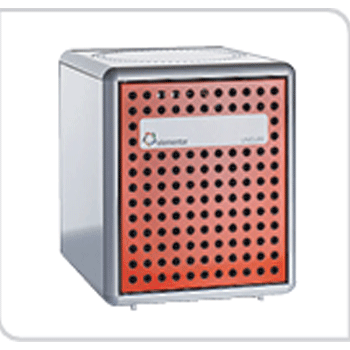 CHNS Analyzer
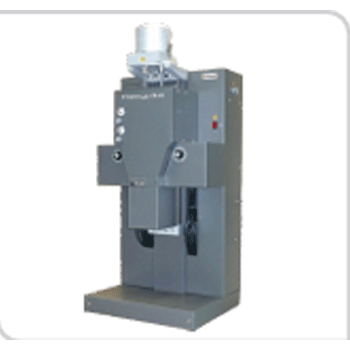 Simultaneous Thermal Analysis (TGA DTA)