
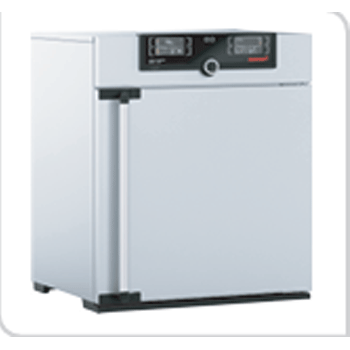
Universal ovens typically boast features that ensure precise control, uniform temperature distribution, and reliable operation:
Temperature Range: They usually operate from slightly above ambient temperature up to 250°C, 300°C, or even higher, depending on the model. Temperature Control: Advanced digital PID controllers with high-definition displays allow for highly accurate temperature setting and monitoring, often with resolutions as fine as 0.1°C. Some models offer "SetpointWAIT" functions, where the process time only begins once the set temperature is reached, ensuring consistency. Convection Type: Natural Convection (UN models): Air circulates naturally within the chamber. This is suitable for samples that might be disturbed by moving air or for less critical drying application Forced Air Circulation (UF models): A fan or air turbine circulates the air, providing more uniform temperature distribution and faster drying times. Some models allow for adjustable fan speed. Air Exchange: Many universal ovens feature an electronically adjustable air flap for controlling the admixture of pre-heated fresh air, which is crucial for certain drying and aging processesConstruction: They are typically constructed with an easy-to-clean stainless steel interior and often a durable stainless steel or powder-coated mild steel exterior. Safety Features: Built-in safety mechanisms are standard, including electronic overtemperature monitors, mechanical temperature limiters, and auto-diagnostic systems for fault analysis. Alarms (visual and acoustic) for temperature deviations are also common. Programming and Documentation: Many modern universal ovens come with intuitive interfaces, sometimes touchscreens, allowing for complex ramp programs (temperature and time profiles). Software like AtmoCONTROL enables data logging, management, and organization of process data. Shelving: They come with multiple stainless steel shelves, often with anti-tilting systems and high load capacities.
 Atomic Absorption Spectrophotometer
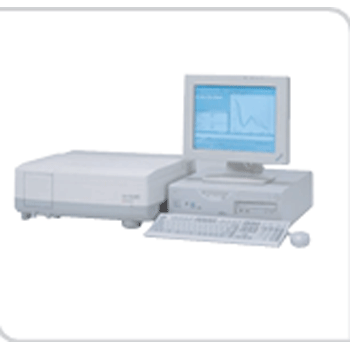 UV Vis Spectrophotometer
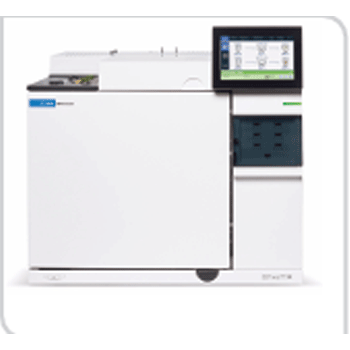 Gas Chramatograp (GC)
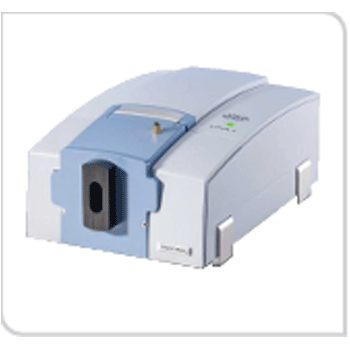 FT-IR Spectrometer
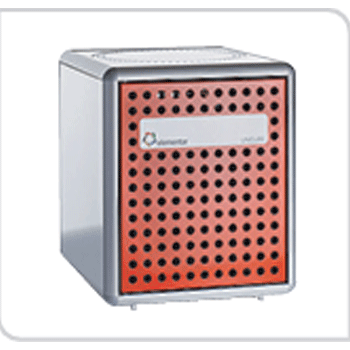 CHNS Analyzer
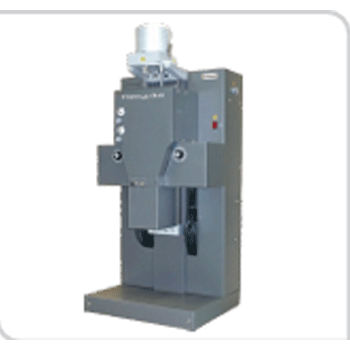 Simultaneous Thermal Analysis (TGA DTA)