
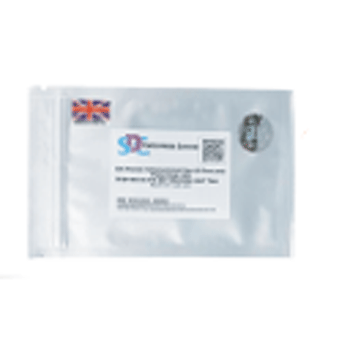
The term "Control Fabric" suggests that these fabric pieces are intended for testing, comparison, or calibration purposes. Here's a breakdown of what that could imply:
Quality Control: Businesses, especially in textiles, might use these standard fabric pieces to compare against their manufactured products. They could check for consistency in color, texture, weave, or other properties.
Color Matching/Calibration: For industries dealing with dyes or printing, these control fabrics might have a precise, known color that can be used to calibrate machinery or compare against dyed samples to ensure accurate color reproduction.
Material Testing: They could be used for various tests like shrinkage, pilling, abrasion resistance, or tensile strength, providing a baseline for comparison.
Standard Samples: In educational settings or research, these could serve as standard samples of a particular type of fabric for study and analysis.
Product Development: Designers or manufacturers might use these small pieces to test out new dyes, finishes, or treatments on a small scale before committing to larger production.
In essence, these are likely standardized fabric swatches used to maintain consistency, ensure quality, or provide a reference point in various applications related to textiles.
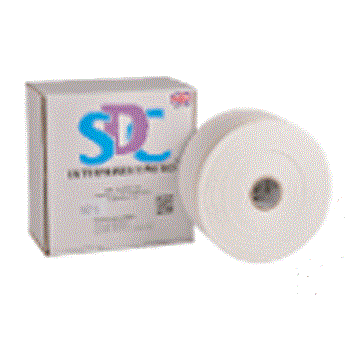 Multifibre DW 2115: 10 Metre Roll
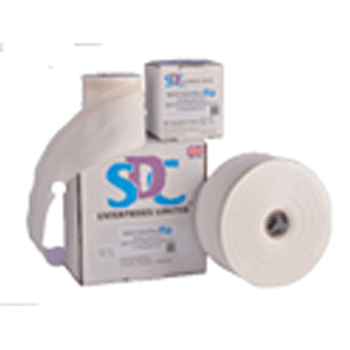 Multifibre LyoW 2165: 10 Metre Roll (A) Non-Phosphate)
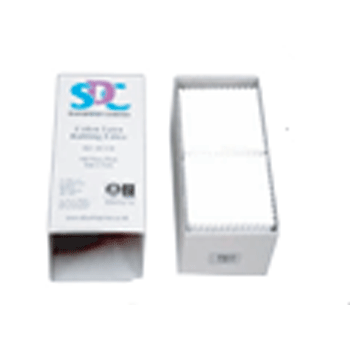 SDCE Cotton Lawn 1323:5𐤕5cm (Gimped) 500 Piece Pack
 Impregnated Test Papers
 BHT Free 63 Micron Film 400Piece Pack