
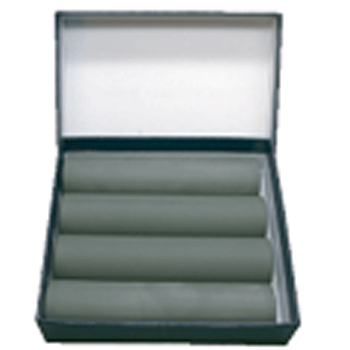
Polyurethane (PU) tubing is a versatile and widely used type of flexible pipe made from polyurethane
Polyurethane is a polymer formed by the reaction of diisocyanates or polyisocyanates with polyols.
Ester-based PU tubing: Generally less expensive, offering excellent abrasion resistance and tensile strength, but can be susceptible to hydrolysis (degradation in the presence of water/humidity).
Ether-based PU tubing: Provides superior resistance to water, hydrolysis, and fungi.
Key Properties and Characteristics:
Flexibility and Elasticity: Polyurethane tubing is highly flexible, allowing for tight bend radii without kinking, and possesses excellent elastic memory, meaning it returns to its original shape after deformation.
Abrasion and Tear Resistance: It exhibits exceptional resistance to abrasion, impact, and tearing, outperforming many other materials like PVC and nylon in harsh conditions.
Chemical Resistance: Polyurethane tubing offers good resistance to many chemicals, including oils, fuels, grease, and various solvents.
Pressure Resistance: PU tubes can withstand significant pressure, making them reliable for pneumatic and fluid transfer systems.
Temperature Resistance: They can operate across a wide range of temperatures, typically from -40°C to +80°C, with some formulations handling even lower or occasional higher temperatures.
Low Gas Permeability: This property makes it suitable for applications where gas leakage needs to be minimized.
Biocompatibility (for specific grades): Certain formulations of polyurethane tubing are biocompatible, making them safe for use in medical and food contact applications.
Mold, Mildew, and Fungi Resistance: Especially ether-based polyurethanes, they generally do not support the growth of these microorganisms, making them suitable for tropical or hygienic environments.
Good Electrical Insulating Properties: Polyurethane can act as a protective layer to prevent electrical shocks or short circuits.
Lightweight: Its lightweight nature makes it ideal for applications where weight reduction is important, such as in robotic systems.
Noise Reduction: Compared to metal or rigid plastic tubing, polyurethane tubing can help reduce noise in systems.
Colorability: Available in various colors, allowing for easy identification and organization in complex systems.
Odorless and Tasteless (for specific grades): Food-grade and medical-grade PU tubing is designed to be neutral, preventing the transfer of odors or tastes to the transported substances.
Advantages:
Superior flexibility and kink resistance.
Excellent abrasion, tear, and impact resistance.
Good chemical, oil, and fuel resistance.
Wide operating temperature range.
High pressure and vacuum capabilities.
Biocompatibility (for specific grades).
Lightweight and easy to handle.
Low gas permeability.
Good electrical insulation.
Resistant to mold, mildew, and fungi.
Can be formulated to be non-toxic and flame retardant.
Relatively economical compared to some other high-performance tubing materials.
Easy to install and customize.
Disadvantages/Limitations:
Susceptibility to Hydrolysis: Ester-based polyurethanes can degrade in humid environments or when exposed to water for prolonged periods.
Poor Weatherability (for some types): While some formulations offer UV resistance, standard polyurethanes may degrade in direct sunlight or with prolonged outdoor exposure.
Attacked by Some Solvents: Can be affected by certain concentrated acids, alkalis, and organic solvents.
Tackiness: Polyurethane can be naturally tacky and may stick to itself, potentially leading to tangles (though additives can reduce this).
Flammability: Some formulations can be flammable, requiring special flame-retardant versions for certain applications.
Higher Cost than some basic plastics: While economical for its performance, it can be more expensive than materials like standard PVC for less demanding applications.
Common Applications:
Polyurethane tubing is widely used across various industries due to its unique combination of properties:
Pneumatic Systems: Air lines, compressed air transfer, and control systems in automation and robotics.
Fluid Transfer: Transporting water, chemicals, oils, fuels, and other non-corrosive fluids in industrial, automotive, and laboratory settings.
Medical Devices: Catheters, IV tubing, oxygen masks, and other medical equipment due to its biocompatibility and flexibility.
Food and Beverage Industry: Transfer of dry food products like flour and grains, as well as some liquids, with food-grade formulations.
Robotics: Carrying air or hydraulic fluids to power and control robotic movements.
Automotive Systems: Fuel lines, brake lines, and air conditioning systems.
Industrial Equipment: Pumps, valves, hoses, machine tooling, and packaging machinery.
Material Handling: Conveying powders, granules, and small components.
Electrical Insulation: Protecting wires and other electrical components.
Commercial Printers and Copiers: Ink delivery and vacuum handling due to flexibility and resistance to clogging.
HVAC Systems: Various applications within heating, ventilation, and air conditioning. In summary, polyurethane tubing is a high-performance material offering an excellent balance of flexibility, strength, and resistance, making it a preferred choice for demanding applications where durability and reliability are crucial.
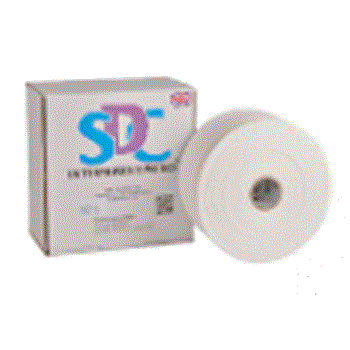 Multifibre DW 2115: 10 Metre Roll
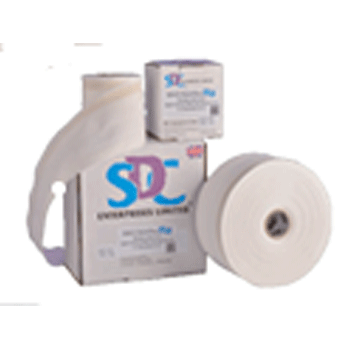 Multifibre LyoW 2165: 10 Metre Roll (A) Non-Phosphate)
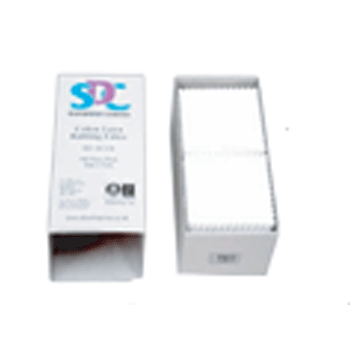 SDCE Cotton Lawn 1323:5𐤕5cm (Gimped) 500 Piece Pack
 Impregnated Test Papers
 Control Fabric 10𐤕3cm 25 Piece Pack
 BHT Free 63 Micron Film 400Piece Pack