
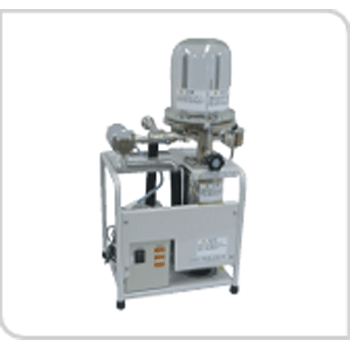
Thermal Vacuum Dryer (also commonly referred to as a vacuum dryer or vacuum oven) is a specialized piece of industrial equipment used to remove moisture or solvents from materials by creating a low-pressure (vacuum) environment and applying heat. This combination allows for efficient and gentle drying, particularly for heat-sensitive or delicate substances.
1. Principle of Operation:
Lowering Boiling Point: The fundamental principle is that the boiling point of a liquid decreases significantly as the surrounding pressure is reduced. In a vacuum dryer, a vacuum pump creates a reduced-pressure environment within the drying chamber. This lowers the boiling point of water (or other solvents) in the material, allowing it to evaporate at much lower temperatures than at atmospheric pressure.
Heat Transfer: Heat is applied to the material, typically through heated shelves, jackets, or internal elements. This heat provides the energy needed for the moisture to vaporize at the lowered boiling point. The heat transfer is often by conduction.
Vapor Removal: The evaporated moisture or solvent vapor is continuously drawn out of the chamber by the vacuum pump.
2. Components:
Drying Chamber: A sealed, airtight chamber (often made of stainless steel to withstand vacuum pressure) where the material is placed.
Vacuum Pump: The critical component that evacuates air and vapor from the chamber, creating and maintaining the desired vacuum level.
Heating System: Provides the necessary thermal energy. This can be electric heaters, steam coils, hot water jackets, or even microwave heating in some advanced systems.
Condenser (Optional but common): Recovers evaporated solvents by condensing them back into liquid form. This is particularly useful for expensive or environmentally sensitive solvents.
Control System: Monitors and regulates temperature, pressure, and drying time to ensure optimal drying conditions and prevent damage to the product.
Valves and Gauges: For controlling and monitoring the vacuum and temperature.
3. Advantages:
Gentle Drying: Ideal for heat-sensitive materials (e.g., pharmaceuticals, food products, biologicals) that would degrade or lose potency at high temperatures used in conventional drying methods.
Preserves Product Quality: Minimizes thermal degradation, oxidation, and changes in color, flavor, or nutritional value due to lower drying temperatures and reduced oxygen exposure.
Faster Drying Times: The lowered boiling point accelerates the evaporation rate, leading to shorter drying cycles compared to some atmospheric drying methods.
Energy Efficiency: Less heat energy is required due to the lower boiling point of the liquid.
Solvent Recovery: Enables the recovery and reuse of expensive or hazardous solvents, reducing costs and environmental impact.
Versatility: Can dry a wide range of materials, including powders, granules, pastes, slurries, and even entire components.
Improved Safety: Reduces the risk of explosion when dealing with flammable solvents due to the absence of oxygen.
4. Applications:
Thermal vacuum dryers are widely used across various industries:
Pharmaceutical Industry: Drying active pharmaceutical ingredients (APIs), excipients, herbal extracts, vaccines, and other sensitive drugs.
Food Processing: Dehydrating fruits, vegetables, herbs, spices, coffee, and producing instant foods while preserving nutritional value and flavor.
Chemical Industry: Drying temperature-sensitive chemicals, specialty polymers, pigments, catalysts, and recovering solvents.
Electronics Industry: Removing moisture from sensitive electronic components like PCBs and semiconductors to prevent corrosion and electrical failures.
Materials Science: Drying ceramics, powders, composites, and other materials where precise control over drying conditions is crucial for material properties.
Environmental Applications: Reducing the volume of waste materials like sludge. In essence, a thermal vacuum dryer offers a highly controlled and efficient drying solution, particularly valuable when dealing with materials that demand gentle treatment or when solvent recovery is desired.
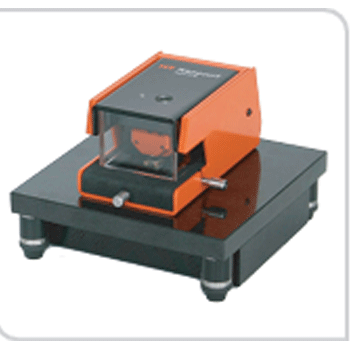 Atomic Force Microscope AFM
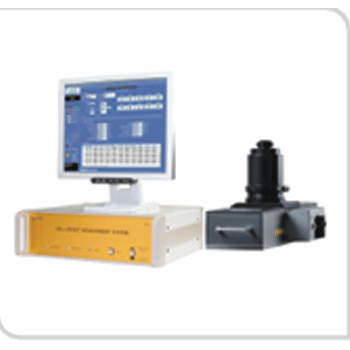 Hall Effect Meserment System
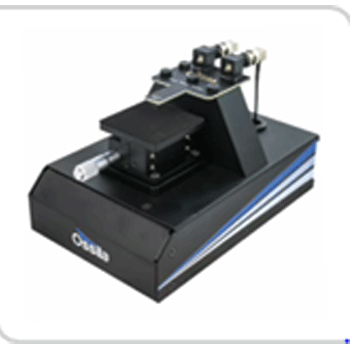 Four-Point Probe
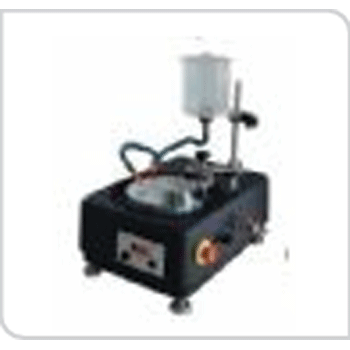 Polishing & Grainding Machine
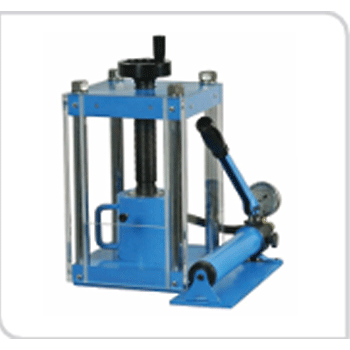 Lab Press With Hydraulic Pump
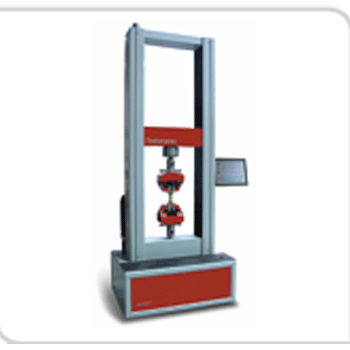 Universal Tensile Tester (UTM)